PRESIDENT RAMAPHOSA REAFFIRMS COMMITMENT TO ENERGY REFORM AND INDEPENDENT TRANSMISSION OPERATOR
PRESIDENT RAMAPHOSA REAFFIRMS COMMITMENT TO ENERGY REFORM AND INDEPENDENT TRANSMISSION OPERATOR
Images may be subject to copyright.
Date: Monday, 31 August 2026
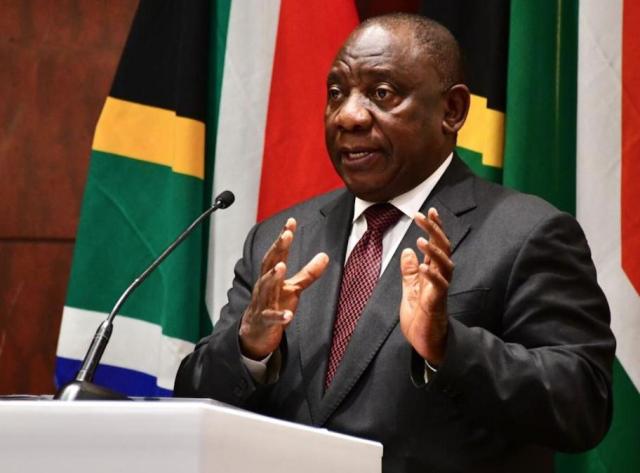
President Cyril Ramaphosa has reaffirmed government's commitment to South Africa's energy reform programme.
This follows a meeting with Eskom Board Chairperson Mteto Nyati on Thursday, 27 August 2026.
In a statement released by The Presidency on Monday, President Ramaphosa said government will push ahead with establishing a fully independent Transmission System Operator (TSO) that will own and control South Africa's transmission assets.
The implementation will be led by the Eskom Restructuring Task Team (ERTT), which includes The Presidency, National Treasury, Department of Electricity and Energy, Eskom and the National Transmission Company South Africa (NTCSA).
The President stressed that the TSO will remain state-owned as a strategic national asset.
Eskom Board Chair Mteto Nyati confirmed the Board's support for the government's policy direction and committed to alignment between the Board and government as shareholder.
2. BACKGROUND - WHY THIS MATTERS & WHAT IS A TSO?:
South Africa is unbundling Eskom into three separate companies: Generation (makes electricity), Transmission (moves electricity), and Distribution (delivers to homes). This is required by the Electricity Regulation Amendment Act.
What is the TSO? The Transmission System Operator is the company that will own the national grid - all the big power lines and substations. It decides who gets to put electricity onto the grid.
Why make it independent? Currently, Eskom generates most of the power AND controls the grid. Independent power producers (solar, wind companies) have complained Eskom blocks them from connecting. An independent TSO creates a level playing field where Eskom's power stations and private solar/wind farms are treated equally.
Why did Nyati raise concerns? The Eskom Board was worried that if you take the transmission grid away from Eskom, Eskom will lose its most valuable asset, its financial position will weaken, and banks that lent Eskom billions (over R400bn debt) might panic and call back loans. The President has now assured that the reform will be done in a way that protects Eskom's finances and lenders are engaged transparently.
3. IMPACT ON THE PUBLIC:
This reform directly affects every South African who pays for electricity:
a) For Households:
In the short term - no immediate change to your bill. In the long term - more competition should mean more stable and potentially cheaper electricity, because cheaper solar and wind power can finally get onto the grid easily. It is key to ending load shedding for good.
b) For Businesses & Jobs:
Unlocks billions in private investment. Companies waiting to build solar and wind farms can now invest, creating jobs in construction and energy. For businesses, a stronger transmission network means less load reduction and more reliable power.
c) For Taxpayers:
Government wants to ensure Eskom does not collapse financially during this split, because Eskom's debt is guaranteed by taxpayers. The reform must strengthen the grid (we need R300bn+ for new power lines) without breaking Eskom.
4. WHAT THE PUBLIC CAN DO / HOW TO BE INVOLVED:
This is a public process - citizens and businesses can participate:
For Households:
- Reduce strain on the grid while it is being expanded: Use geysers outside peak hours (6am-9am and 5pm-9pm), switch to gas or solar geysers where possible.
- If you have rooftop solar, ensure you are registered with your municipality / Eskom to feed power back legally when the new market opens.
For Businesses & IPPs:
- Monitor the NTCSA and DMRE websites for upcoming public consultations on grid access rules and tariffs.
- Small businesses can start applying for wheeling agreements - where you buy solar power from a farm elsewhere using the national grid.
For Workers:
The President met with NUM leadership before this. If you are in the energy sector, engage your union (NUM, NUMSA) on reskilling programmes for the new energy economy. Government has committed that no worker will be left behind.
For General Public:
Public comments on the energy reforms are handled through the Department of Electricity and Energy. Keep an eye on http://www.dmre.gov.za and http://www.thepresidency.gov.za for comment windows.
SOURCE: The Presidency of the Republic of South Africa via http://SAnews.gov.za